











NAIROBI, March 23, 2026
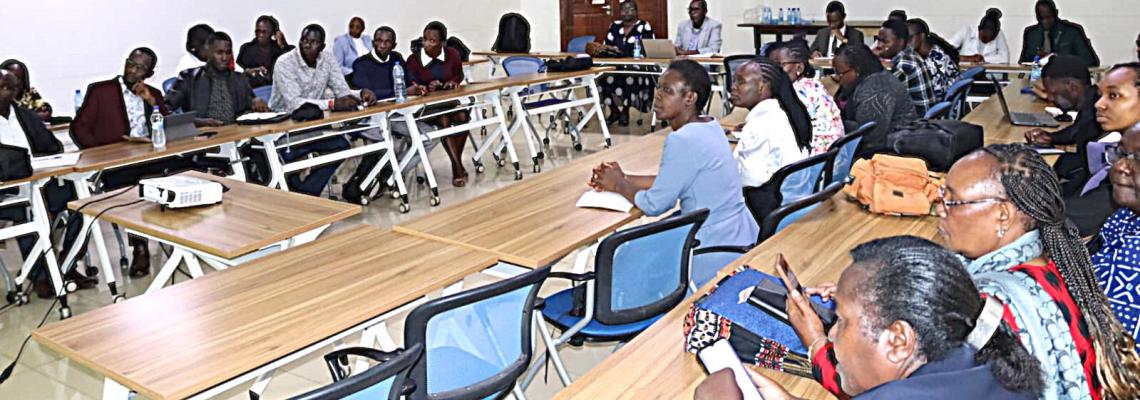
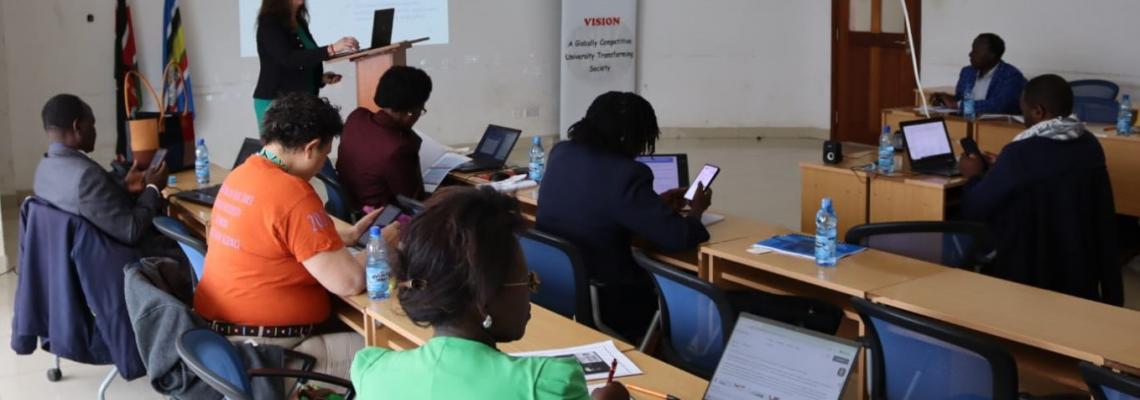
In a move to redefine how mathematics is taught and experienced in classrooms, the University of Nairobi’s Faculty of Education hosted a high-impact virtual public lecture featuring Prof. Judah-Paul Makonye. The session, titled "Mathematics Education & Developing Mathematical Resilience," brought together postgraduate students and faculty to explore the intersection of complex mathematical theory and empathetic classroom practice.
The lecture was a collaborative effort between the Department of Educational Communication Technology and Pedagogical Studies and the Department of Educational Management, Policy and Curriculum Studies. Prof. Makonye, an NRF-rated researcher and Head of Mathematics Education at the Wits School of Education, South Africa, challenged traditional views that often lead to student anxiety and disengagement.
A central theme of the lecture was the comparison between two distinct pedagogical philosophies:
- Absolutist View: Traditionally, mathematics is seen as a collection of absolute, unchanging truths. Under this lens, errors are viewed as failures, which often causes learners to internalize a sense of incompetence and high anxiety.
- Fallibilist View: Prof. Makonye advocated for this human-centered approach, viewing mathematics as an evolving field that is open to revision. In this model, misconceptions are treated as valuable insights into a learner's thinking process.
Prof. Paul Makonye emphasized, "By normalizing mistakes as part of the learning journey, we foster resilience and reduce the paralyzing anxiety often associated with the subject."
The lecture emphasized that mathematical resilience—the ability for students to persist through difficulty—is not achieved by simply "trying harder". Instead, it requires educators to create a "safe-to-fail" environment where mistakes are seen as natural steps in refining knowledge.
Prof. Makonye’s expertise as the Deputy Chair of the Universities South Africa Teaching & Learning Mathematics Community of Practice provided a rich foundation for discussing Social Learning Theory and how classroom environments directly impact cognitive development.
The participating departments at the University of Nairobi have committed to integrating these pedagogical strategies into their curriculum. This initiative aims to equip the next generation of educators with the tools to handle learner misconceptions effectively and foster a more resilient student body.

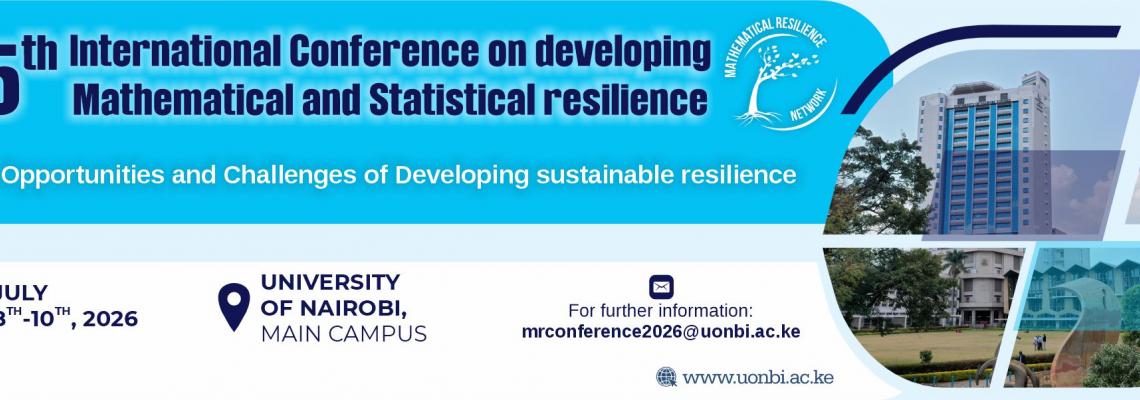
5th International Conference on Developing Mathematical Resilience
- Log in to post comments